Living Planet Index


The Living Planet Database
The Living Planet Index (LPI) uses primary data on vertebrate species population to quantify trends in abundance. The dataset behind the LPI is stored in the Living Planet Database (LPD). The LPD is the largest repository of vertebrate population abundance data available. Using a method developed by ZSL and WWF, these species population trends are aggregated to produce indices of the state of biodiversity, the results of which are published every two years in WWF’s Living Planet Report (LPR), along with the updated LPD published on the LPI website. The LPD also has an additional role as a resource for global biodiversity research and has been used in a variety of research papers.
The LPD currently holds time-series data for almost 41994 populations of 5570 vertebrate species from around the world. This data is gathered opportunistically from a variety of sources such as journals, online databases and government reports. The database is continually growing, with work focusing on expanding the coverage of data to more broadly represent vertebrate biodiversity across the globe.
The database also collects information alongside species populations trends, such as where the species was monitored and local threats. As a result, the LPD can support a variety of research and more in-depth views of the changes in species around the world. See the Publications for examples of this research.
Taxonomic representation
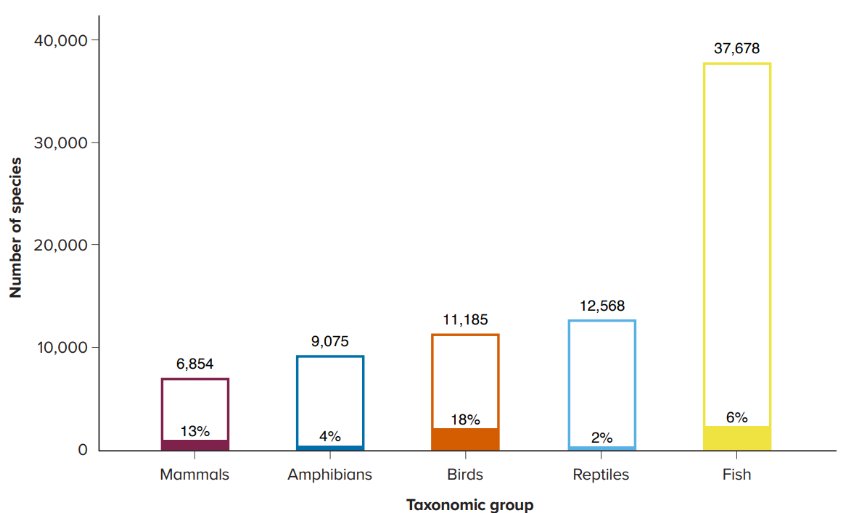
While an LPI can be calculated using data for any species, the LPD and LPI focuses on vertebrate species, as these groups have been monitored more consistently and for longer. The figure below shows how the number of species in the database compares to the total number of species known to exist. It shows that the current index represents between 2% and 18% of known species within vertebrate taxonomic groups, with mammals and birds being the best represented in the available data. Amphibians and reptiles remain the most underrepresented taxa in the LPD. New species are continually added to the database, resulting in a more representative trends over time.
The global LPI is weighted to for the estimated diversity of vertebrate species globally. This mitigates the remaining taxonomic bias within the LPD. For more detail on weighting the global LPI, see the 2026 Tech supplement.
Geographic representation
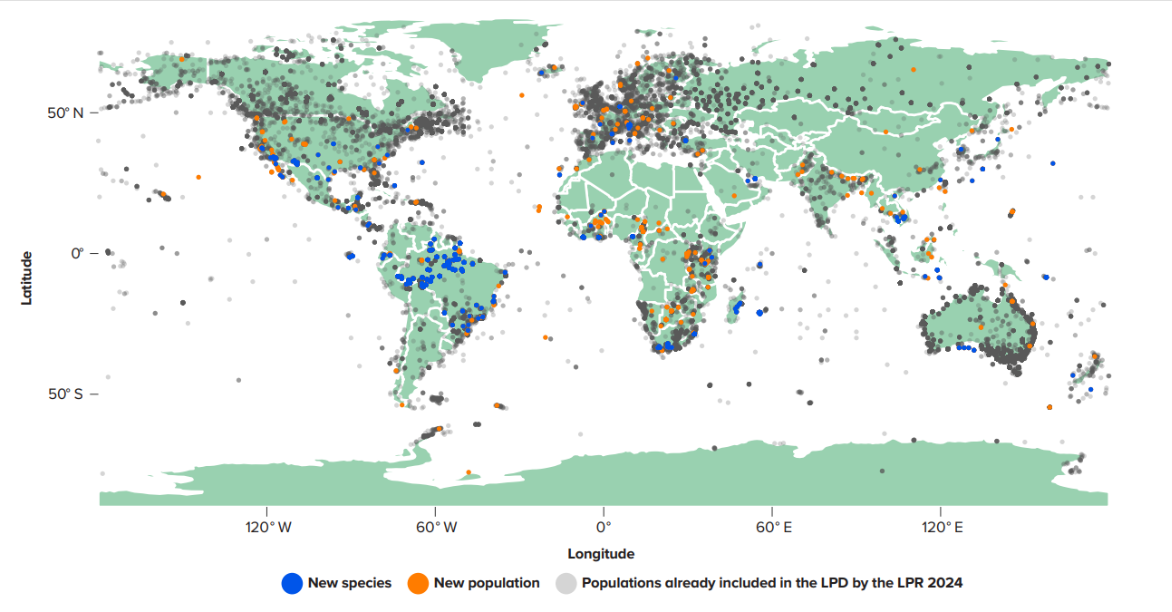
The map below shows the geographic distribution of populations in the LPD. There are more data from regions with a longer history of monitoring and publishing data, such as North America and Europe. Larger gaps tend to be in more remote, tropical areas. We are working to reduce this imbalance by growing the number of tropical species records in the database and boosting representation by searching local journals, international publications in tropical areas and using non-English language data searches.